

Introduction
If your child is not speaking clearly, does not seem to understand simple instructions, or struggles to tell you what they want, it is normal to feel concerned. Many parents are advised to look into speech therapy, but they are often not sure what it actually means or how it helps.
This guide is for parents in Pakistan who want a simple and clear understanding of speech therapy. It explains what speech therapy is, which children may need it, what usually happens in therapy, and how to find the right therapist.
What Is Speech Therapy?
Speech therapy is a professional service that helps people improve the way they communicate. It can help both children and adults. A trained specialist called a Speech-Language Pathologist, also known as an SLP, provides it.
Many people think speech therapy is only for children who cannot pronounce words properly, but it covers much more than that. It can help with understanding language, speaking more clearly, using words and sentences, stammering, social communication, voice problems, and even feeding or swallowing difficulties.
In simple words, speech therapy helps a person communicate better in everyday life.
Who May Need Speech Therapy?
Speech therapy can help children with different types of speech and language difficulties. If you have noticed that your child is having trouble in any of these areas, it may be a good idea to get them assessed.
Some children mispronounce sounds long after the age when their speech should be clearer. Others may speak very little, have a small vocabulary, or find it hard to make sentences. Some children repeat sounds, are stuck while speaking, or show signs of stuttering. Children with autism may also have delays in speech and social communication. Hearing loss can affect speech and language development as well. Children with conditions such as Down syndrome or cerebral palsy may also need support with communication. In some cases, voice problems or swallowing issues can also be part of the concern.
The best approach is not to keep guessing. If something feels delayed or unusual, a proper assessment is the safest next step.
Speech and Language Milestones
Parents often ask whether their child’s speech is developing normally. Every child develops at their own pace, but there are still some general milestones that can help guide parents.
By around 12 months, a child usually says one or two words and responds when their name is called.
By 18 months, many children are using at least a few words and can follow simple instructions.
By 2 years of age, children often start joining two words together and may have a vocabulary of around 50 words.
By 3 years, many children are speaking in short sentences, and most of what they say can be understood by others.
By 4 to 5 years, children are usually able to speak more clearly, hold simple conversations, and tell small stories.
If a child is clearly behind in these areas, it is better to get professional advice rather than waiting too long.
Why Early Help Matters
When speech or language difficulties are identified early, the chances of improvement are usually better. The early years of life are especially important because this is the time when the brain is developing rapidly and learning language more naturally.
A child who starts therapy earlier often makes progress more easily than a child who starts much later. This does not mean therapy is useless at an older age. It simply means early support gives the child a stronger advantage.
If you are worried about your child’s communication, early action is usually the better choice.
What Happens in Speech Therapy?
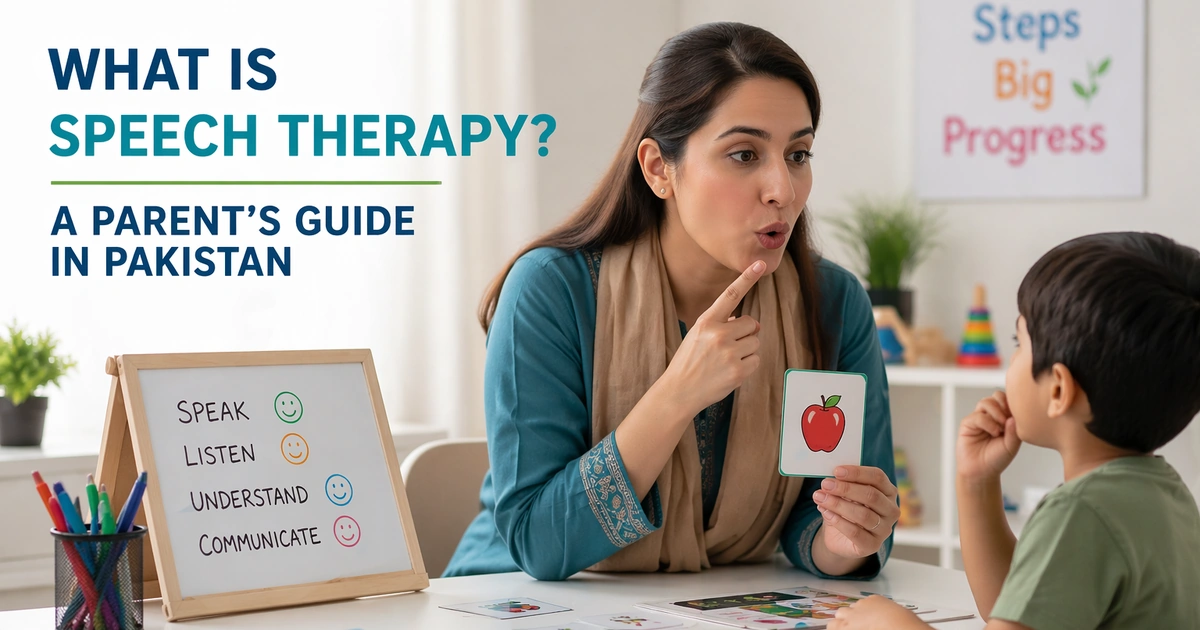
The first appointment is usually an assessment. During this session, the speech therapist observes how your child communicates, listens to your concerns, and asks questions about your child’s development and background. They may also use simple activities or age-appropriate tasks to understand your child’s strengths and difficulties.
Once the assessment is complete, a treatment plan is made according to the child’s needs.
Therapy sessions are usually around 45 to 60 minutes long. For younger children, these sessions are often play-based. The therapist may use toys, books, games, or simple activities to work on communication skills in a natural way. Older children may do more structured tasks, depending on their age and needs.
Parents also play an important role. Therapy does not end with the weekly session. A child usually improves more when the same skills are practiced at home during normal routines such as playtime, mealtime, or bedtime. A good therapist should always guide parents on how to support the child outside the clinic as well.
Speech Therapy in Pakistan
Speech therapy is gradually becoming more available in Pakistan, especially in larger cities. Awareness is improving, but many families still delay getting help because they do not know where to start or whether therapy is really needed.
There are qualified speech therapists in cities such as Islamabad who work with children and adults facing different communication difficulties. These may include speech delay, language problems, autism-related communication challenges, stuttering, hearing loss, and voice disorders.
Speech therapy in Islamabad is usually available in three main forms. Some families choose clinic-based therapy, where sessions are held in a professional setting. Others prefer home-based therapy, where the therapist visits the child at home. Online therapy is also becoming more common and can be helpful for families living in areas where services are limited.
Choosing the Right Speech Therapist
Finding the right therapist is very important. Parents should look for someone who is properly qualified in Speech and Language Pathology and has experience with the type of difficulty their child is facing.
A good therapist does not begin therapy blindly. They first assess the child, understand the concern, and then plan treatment accordingly. Parent involvement is also very important, so it is always better to choose someone who shares home practice tips and keeps the family updated about progress.
Another important point is the child’s comfort. Children usually respond better when they feel relaxed and safe with the therapist. A good connection can make therapy more effective.
Common Questions Parents Ask
Many parents want to know what age is best for speech therapy. The simple answer is that there is no minimum age. Therapists can work with very young children, school-going children, teenagers, and even adults. In most cases, earlier support is better.
Some parents also worry that therapy may go on forever. That is not always the case. Many children improve well and are discharged once their goals are met. Some children with more complex needs may require support for a longer period or at different stages as they grow.
Online speech therapy is also available in Pakistan now, and many qualified therapists offer it. This can be useful for families who cannot travel easily or do not have access to services nearby.
Parents also often ask whether their child truly needs therapy or just needs more time. The best way to know is through a professional assessment. It gives a clearer answer than waiting and hoping the issue will settle on its own.
Conclusion
Speech therapy can make a meaningful difference in a child’s life. It can improve communication, support learning, and help children feel more confident in daily life.
For parents in Pakistan, understanding speech therapy is the first step toward getting the right help. If you feel concerned about your child’s speech, language, or communication, it is better not to ignore those signs. Early support can lead to better progress, and the right help at the right time can make things much easier for both the child and the family.