

Introduction
Whether you are recovering from an injury, dealing with persistent back pain, or supporting a child with movement difficulties, physiotherapy is one of the most effective forms of treatment available. Yet many people in Pakistan are still unsure what physiotherapy actually involves, who it is meant for, and what happens during a session.
This guide breaks it down in simple, everyday language — so you know exactly what to expect before you walk through the door.
What Is Physiotherapy?
Physiotherapy is a healthcare service that helps people recover movement, reduce pain, and improve their physical function. It is provided by a trained professional called a physiotherapist, who uses a combination of exercises, hands-on techniques, and guided rehabilitation to help the body heal and work better.
It is not just for athletes or accident victims. Physiotherapy helps people of all ages, from young children with developmental movement delays to elderly adults managing arthritis or recovering from a stroke.
Who Needs Physiotherapy?
This is one of the most common questions people ask. The simple answer is, anyone who is experiencing pain, stiffness, weakness or difficulty moving in a way that is affecting their daily life.
Some of the most common reasons people seek physiotherapy include:
- Back and neck pain — one of the most frequent reasons people visit a physiotherapist, often caused by poor posture, long hours at a desk or physical strain
- Sports injuries — sprains, muscle tears, ligament damage and joint injuries that need structured rehabilitation to heal properly
- Post-surgery recovery — after operations on the knee, hip, spine or shoulder, physiotherapy helps restore strength and movement
- Stroke rehabilitation — physiotherapy plays a critical role in helping stroke survivors regain movement and independence
- Arthritis and joint pain — guided exercises and manual therapy reduce pain and improve joint function over time
- Neurological conditions — conditions such as cerebral palsy, Parkinson’s disease and multiple sclerosis affect movement, and physiotherapy helps manage these challenges
- Children with developmental delays — some children struggle with motor skills, coordination or physical milestones, and paediatric physiotherapy supports their development
- Chronic pain — long-term pain conditions that have not responded to medication alone often improve significantly with physiotherapy
If any of these sound familiar, a professional assessment is the right next step.
Why Early Treatment Matters
Many people in Pakistan wait too long before seeking physiotherapy. They hope the pain will go away on its own, or they are not sure whether their problem is serious enough to warrant treatment.
The truth is that early treatment almost always produces better results. When pain or movement difficulties are addressed early, the body responds more quickly, recovery is faster, and the risk of the problem becoming chronic is significantly reduced.
Ignoring a problem for months, hoping it will settle, often makes it worse and harder to treat later. If something has been bothering you for more than two to three weeks, it is worth getting a proper assessment rather than continuing to wait.
What Happens During a Physiotherapy Session?
Many people are nervous before their first appointment because they do not know what to expect. Here is a straightforward overview of how it typically works.
The First Session — Assessment
Your first appointment is usually an assessment. The physiotherapist will ask you about your symptoms, how long you have had them, what makes them better or worse, and your general health and lifestyle. They will also observe how you move and may carry out some simple physical tests to understand the root cause of the problem.
Based on this assessment, they will explain what they believe is happening and put together a treatment plan tailored to your specific needs.
Treatment Sessions
Sessions usually last between 45 and 60 minutes. Depending on your condition, treatment may include:
- Exercise therapy — specific exercises designed to strengthen weak muscles, improve flexibility or restore normal movement patterns
- Manual therapy — hands-on techniques such as massage, joint mobilisation and soft tissue work to reduce pain and stiffness
- Electrotherapy — devices such as ultrasound or TENS machines that support healing and pain relief
- Postural correction — guidance on how to sit, stand and move in ways that reduce strain on the body
- Education and advice — understanding your condition and how to manage it is a key part of getting better
Home Exercises
A good physiotherapist will always give you exercises to do at home between sessions. These are just as important as the sessions themselves. Progress happens faster when you practise regularly at home, not just during weekly appointments.
Physiotherapy in Pakistan
Access to physiotherapy in Pakistan has improved significantly in recent years. Qualified physiotherapists are now available across major cities including Islamabad, Rawalpindi, Lahore, Karachi and Peshawar, offering treatment for a wide range of conditions in children and adults. Services are typically available in three formats:
- Clinic-based sessions — you visit the physiotherapist at their clinic for a structured session in a professional environment
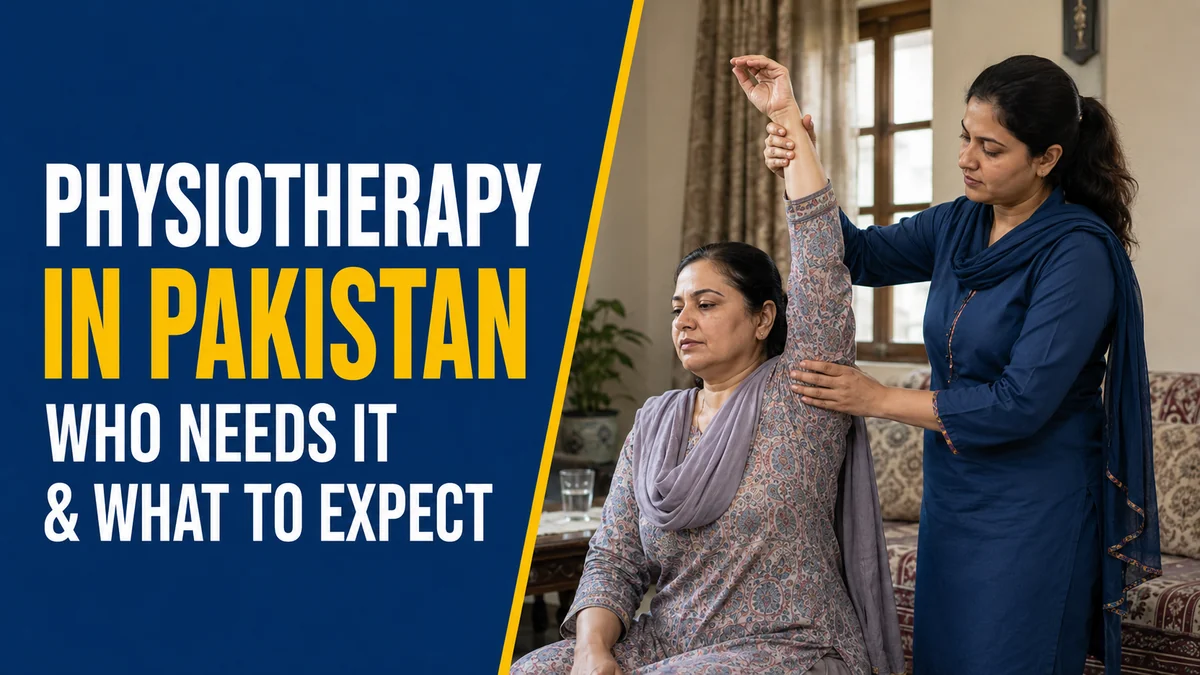
- Home-based sessions — the physiotherapist visits you at home, which is particularly helpful for elderly patients, post-surgery cases or anyone who finds travelling difficult
- Online sessions — video consultations are increasingly available and can be useful for guidance, follow-up and home exercise programmes
For families who need specialist support in the capital, physiotherapy in Islamabad is readily available through certified clinics and home visit services, making it easier than ever to access the right care close to home. For those living outside major urban centres, online physiotherapy has also become a genuinely valuable option, connecting patients in smaller cities and rural areas with qualified professionals they would otherwise not have access to.
How to Choose the Right Physiotherapist
Finding the right physiotherapist makes a real difference to your recovery. Here are a few things to look for:
- Qualifications — look for a Doctor of Physical Therapy (DPT) degree or equivalent recognised qualification
- Experience — choose someone with experience treating your specific condition
- Clear communication — a good physiotherapist explains what is happening in plain language and answers your questions honestly
- Home exercise guidance — they should always send you away with practical exercises and clear instructions
- Patient comfort — you should feel at ease and respected throughout your treatment
Frequently Asked Questions
Is physiotherapy painful?
It should not be. Some techniques may cause mild discomfort, especially when treating stiff joints or tight muscles, but a good physiotherapist will always work within your comfort level and adjust accordingly.
How many sessions will I need?
It depends on the condition. Some people improve in four to six sessions. Others with more complex or long-standing conditions may need longer. Your physiotherapist should give you a realistic idea of the timeline after the initial assessment.
Can children have physiotherapy?
Yes. Paediatric physiotherapy supports children with movement delays, coordination difficulties, neurological conditions and sports injuries. It is adapted to be age-appropriate and engaging for younger patients.
Is physiotherapy available online in Pakistan?
Yes. Many qualified physiotherapists now offer online sessions across Pakistan, which is particularly useful for patients in cities and towns where specialist services may not be locally available.
How do I know if I need physiotherapy or just rest?
If your pain or movement difficulty has lasted more than two to three weeks, is getting worse, or is affecting your daily life, a professional assessment is the right next step rather than continuing to rest and hope it improves on its own.
Conclusion
Physiotherapy is for anyone who wants to move better, hurt less and recover fully — whether from an injury, an operation, a long-term condition or a developmental challenge. It is not just for serious cases. It is for everyday problems that are getting in the way of everyday life.
If something has been bothering you for a while, do not keep putting it off. An early assessment is always the best first step and the right support at the right time can make recovery faster, smoother and more complete.